Events
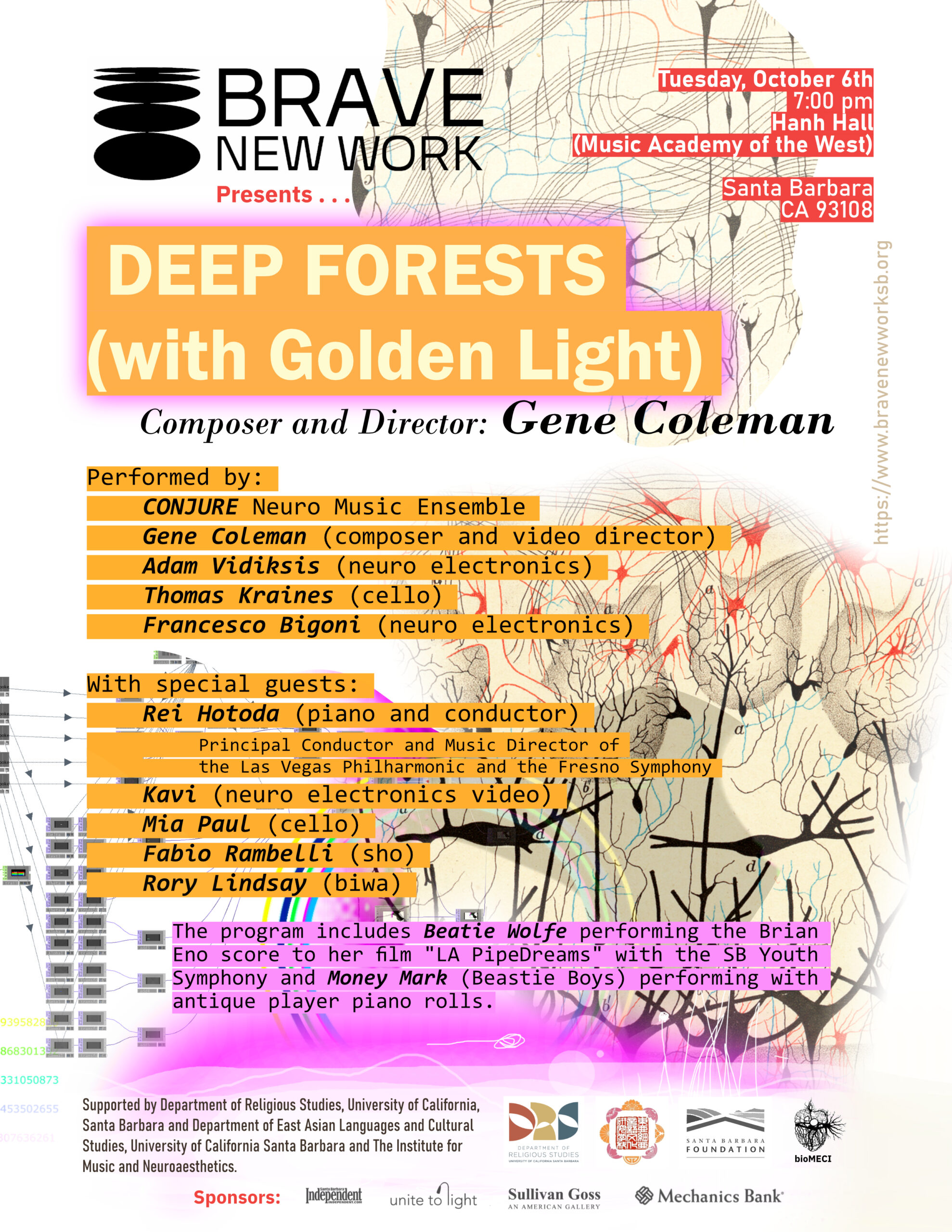
Brave New Work Presents: Deep Forests (with Golden Light)
Brave New Work 2.0 annual symposium and public art exhibition
Santa Barbara, California, October 6th to 8th, 2026
more…
Deep Forests (with Golden Light) is a work for piano, ensemble and neuro electronics. It is an investigation of beauty and “non-beauty”. Exploring the Buddhist concept of *Vedana, it combines episodes of rapturous music with rough, stochastic and sublime sounds deeply inspired by nature. The biodata reactions of the mind and body to these sounds are translated into an audio-visual landscape in counterpoint with the music.
This work is inspired by a memory of light piercing into deep forests. It uses the idea of forests metaphorically – images and sounds of dense urban landscapes, neural forests of the brain and actual forests are presented. The music combines the sounds of Western and Japanese instruments, which are linked by deep feelings about nature. In particular, the Sho represents the “golden light” touching the trees, water and other elements of the forest.
Composer Gene Coleman refers to his music as “Neuro Music” – compositions based on models of the Brain’s Auditory Pathway and the whole nervous system more generally. He incorporates biophysical sensing technologies like THE SOURCE by bioMECI as tools that reveal what is happening in the body and mind when we experience sound and music.
*Vedanā refers to the pleasant, unpleasant and neutral sensations that occur when our internal sense organs come into contact with external sense objects and the associated consciousness. Vedanā is identified as valence or “hedonic tone” in psychology.
Deep Forests (with Golden Light)
Composer and Director: Gene Coleman
Performed by:
CONJURE Neuro Music Ensemble
Gene Coleman (composer and video director)
Adam Vidiksis (neuro electronics)
Thomas Kraines (cello)
Francesco Bigoni (neuro electronics)
With special guests:
Rei Hotoda (piano and conductor)
Principal Conductor and Music Director of the Las Vegas Philharmonic and the Fresno Symphony
Ilze Briede [Kavi] (neuro electronics video)
Mia Paul (cello)
Fabio Rambelli (sho)
Rory Lindsay (biwa)
The program also features Beatie Wolfe performing music by Brian Eno for her film “LA PipeDreams” with the Santa Barbara Youth Symphony conducted by Daniel Gee, and a performance by Money Mark (Mark Ramos Nishida).
Date and Location:
Tuesday, October 6th at 7:00 pm
Hanh Hall (Music Academy of the West)
1070 Fairway Rd, Santa Barbara, CA 93108
Supported by:
Department of Religious Studies, University of California, Santa Barbara and Department of East Asian Languages and Cultural Studies, University of California, Santa Barbara and the Institute for Music and Neuroaesthetics.
Supra-Organism: Biophysical Sensing Toward Affective Somatic Integration
MOCO’26, the 10th International Conference on Movement and Computing
Montpellier, France, April 23th to 25th 2026
more…
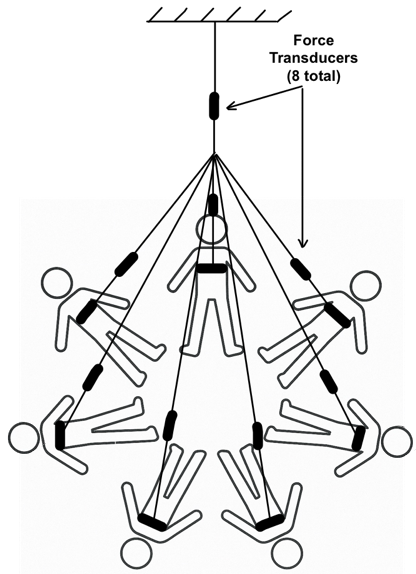
Supra-Organism: Biophysical Sensing Toward Affective Somatic Integration explores methods to advance affective somatic integration through a workshop that fuses biophysical sensing and somatic technologies to explore the boundaries of interoception, proprioception, and exteroception toward cultivating attunement and empathy through collective sensing. The workshop integrates movement and principles of The Feldenkrais Method® with a bespoke biophysical sensing system, THE SOURCE by bioMECI, a suite of wearable tools for full-spectrum physiological monitoring that allows participants to experience their own biophysical signals in real time. These embodied data streams can be translated into movement, sound, and visual feedback, expanding the expressive potential of the sensing body.
Beneath the Skin: Biophysical Signals as a Creative Medium
Mark-David Hosale & Ilze Briede [Kavi]
Friday, April 10 3:00-4:30 pm Jackman Humanities Building – JHB 100 (first floor) 170 St. George Street
more…
This presentation explores an art–science research-creation practice that uses biophysical sensing as a medium for interactive and computational art. Central to this work is THE SOURCE (www.biomeci.com), a biosensing platform developed to enable artists and researchers to incorporate physiological signals directly into responsive media systems. THE SOURCE supports real-time capture of multiple biophysical signals, including electrocardiography (ECG), electrodermal activity (EDA), electromyography (EMG), electroencephalography (EEG), electrooculography (EOG), and respiratory effort (RSP).
Mark-David Hosale will introduce THE SOURCE and demonstrate how physiological signals provide insight into affective and physiological states and how these states can be used to shape audiovisual, haptic, and multisensory outputs in interactive artworks and performances.
Ilze Briede [Kavi] will present her academic research and artworks that use THE SOURCE, including the collaborative works, Somatic Interventions (2022) and Reimagining Living Ontologies (2024), both of which have resulted in scholarly publications. She will also discuss her current PhD research exploring brain data (EEG) and cybernetic feedback systems in artistic practice.
The presentation examines how biophysical signals can function not only as measurements of the body but as expressive materials within embodied and cybernetic media systems that expand the sensorium of computational arts.
Ilze Briede (artist alias Kavi) is a Latvian–Canadian artist and researcher working across visual art, digital design, interactive installation, and live audiovisual performance. Her creative and pedagogical practice engages with biophysical sensing, creative coding, and projection-based media to explore the aesthetic and epistemological potential of physiological data. Kavi is currently a PhD candidate in Digital Media at York University, Toronto, where her research investigates the design of cybernetic systems for performance and immersive narrative environments driven by real-time biophysical signals.
Mark-David Hosale is a computational artist and composer and an Associate Professor in Computational Arts in the School of the Arts, Media, Performance, and Design at York University. His work explores the boundaries between the virtual and the physical world, spanning performance, public art, and gallery installations. Mark-David is the founder of nD::StudioLab (www.ndstudiolab.com), a research-creation space dedicated to art-science exploration, computational art, and interactive architecture. His research integrates hardware, software, and digital fabrication to create immersive experiences that blur the line between the virtual and the real.
This is a free public event. Please register via the Eventbrite link here.
This event is organized by the Jackman Humanities Institute Working Group Performing Gestures, Producing Cultures: Towards an Interdisciplinary Understanding of Human Movement.
Sponsored and hosted by Jackman Humanities Institute.
Presented in partnership with ArtSci Salon (https://artscisalon.com/) and BMO Lab (https://bmolab.artsci.utoronto.ca).
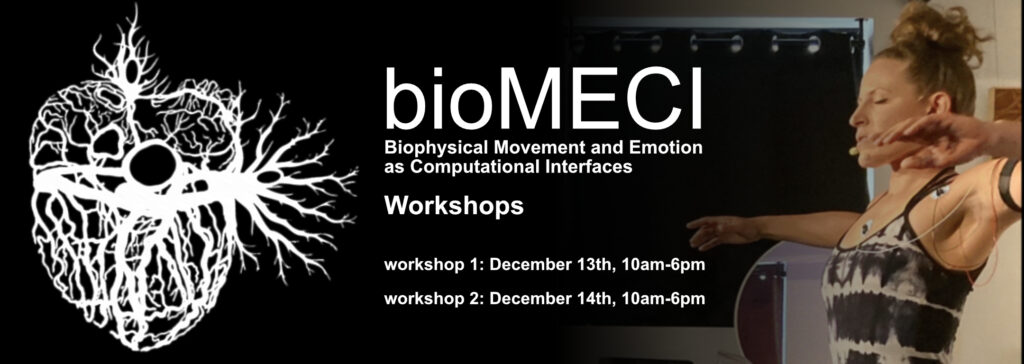
Biophysical Movement and Emotion as Computational Interfaces (bioMECI) Workshop
Dec 13 or 14th, 2025
more…
Biophysical Movement and Emotion as Computational Interfaces (bioMECI) Workshop is a collaborative workshop centred on biophysical data, computational art, and performance. At the centre of this workshop is the biophysical sensing toolkit, called THE SOURCE (www.biomeci.com). THE SOURCE is a wearable device solution for full-spectrum biophysical sensing that integrates with commonly used software platforms, enabling its use in the maker and arts communities. Data gathered from THE SOURCE is analyzed using hardware and software tools that interface with popular platforms such as Arduino, Max/MSP, SuperCollider, Ableton Live, TouchDesigner, and Processing. THE SOURCE provides real-time access to signals from the brain, heart, muscles, skin and eyes and more. This modular system empowers artists to create responsive artworks that engage directly with the body’s inner states.
About bioMECI (www.biomeci.com)
Biophysical Movement and Emotion as Computational Interfaces (bioMECI) research explores how technology can help us create deeper connections with the world around us, each other, and ourselves by combining the latest advances in biophysical sensing technology with physiological awareness techniques.
Workshop schedule
Guided Workshop Activities: 10:00 AM – 2:30 PM (incl. lunch break)
Open Studio: 3:00 PM – 6:00 PM (optional time for Q&A or personal project work)
Workshop activities:
This workshop will introduce participants to THE SOURCE, and offer hands-on, practical experience in harnessing data non-invasively with electrodes, as well as gathering and processing data in real-time for various applications, enabling immediate artistic deployments. This will be a rare opportunity to engage with cutting-edge tools while fostering a deeper awareness of the body’s hidden electrical rhythms and their creative potential.
In the workshop we will:
• Introduce participants to current biophysical sensing techniques with THE SOURCE.
• Offer ethical and mindful approaches to working with embodied data.
• Provide ready-to-use templates in Max/MSP, TouchDesigner, and Ableton Live.
• Support participants in creating immediate and interactive outputs using their biophysical signals.
Workshop requirements:
We encourage participants to bring their laptops and, optionally, anything they use as part of their creative practice. We will provide all the necessary technology for biophysical sensing.
Free with registration (same workshop both days):
Workshop 1: December 13th, 10am–6pm register at:
https://www.eventbrite.com/e/1934433134579
Workshop 2: December 14th, 10am–6pm register at:
https://www.eventbrite.com/e/1941956487129
Q: Do I have to sign up for both workshops?
A: In order to meet expected demand, we are offering the same workshop on both days. It is recommended to sign-up for one day only.
For more information please visit: bioMECI Workshop 2025 at Charles Street Video
Body Electric: Exhibition & Performances
December 5, 6 & 7th, 2025
more…
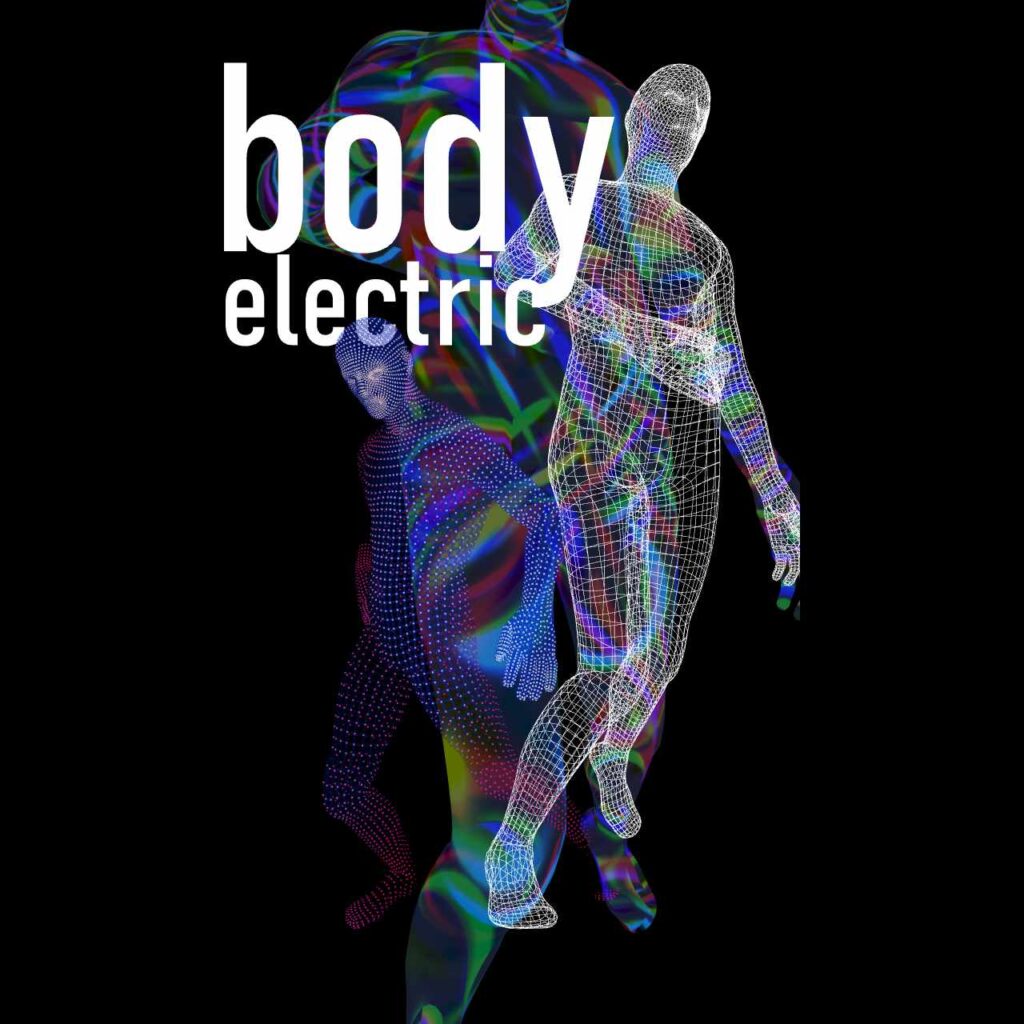
Inspired by Walt Whitman’s visionary poem “I Sing the Body Electric,” this exhibition reimagines the body as a network of electric impulses, voltages, and signals that both generate and transmit lived experiences. Body Electric brings together artists, researchers, performers, and technologists who explore the inner electrical life of the human body through biophysical sensing. By capturing physiological signals such as brainwaves (EEG), heart rhythms (ECG), and muscle activity (EMG), the exhibition reveals the hidden languages of the body — not as metaphor, but as material, as data, as expression.
Electricity governs life on Earth at every scale, from small molecular organisms to sophisticated evolved beings. In the human body, in particular, electricity presents itself as the firing of neurons, the pulse of the heart, the conductivity of the skin, and the flux of emotional states. This exhibition foregrounds electricity not only as a force of animation, but as a creative medium — a raw, natural element that artists can sense, shape, and translate. The electric medium is further carried into the technological domain as a means of instrumentation and expression of gathered data from the human body. Through interactive installations, performances, and sonic-visual systems, Body Electric invites audiences to witness how the body thinks, feels, and reacts beneath the surface. What emerges is a portrait of the human not as a fixed entity, but as an ever-changing field of affective and electrical relations.
Body Electric will take place this December at Charles Street Video (Toronto) and features contributions from York University faculty, students, and international collaborators. The exhibition builds a living bridge between the past and the present, connecting analogue pioneers with today’s generative futures, and invites us to look into the future with an open and curious mind.
Exhibition Dates:
Opening, reception and performances: Friday, December 5th at 6pm,
performances start at 7pm.
Exhibition Open to Public: Saturday, December 6th and Sunday, December 7th
from 12pm – 4pm.
About the Artists:
The programme will feature a series of interactive installations, including body-physiology sensing chairs originally conceptualized by artist Alan Macy, a retrospective of the work of artist, composer, and scholar David Rosenboom, and installations by artists from York University’s nD::StudioLab (https://www.ndstudiolab.com/), including Ilze Briede [Kavi], Kwame Kyei-Boateng, Kyle Duffield, Mark-David Hosale, Hrysovalanti Maheras, and Nava Waxman.
It will also include live performances, among them a new work by composer Gene Coleman with violinist Amy Hillis from York’s Music Department; a performance by The Global Organoid Orchestra (GOO); and a set by the live-coding collective The Endemics.
The Global Organoid Orchestra (GOO) includes:
Mark-David Hosale and Ilze Briede [Kavi] in Toronto;
Diarmid Flatley, Marcos Novak, Iason Paterakis, and Nefeli Manoudaki in Santa Barbara;
and collaborators at the Kosik Neurobiology Lab, UC Santa Barbara (Ken Kosik, Director), along with Tjitse van der Molen and Eve Bodnia.
The Endemics consists of Ilze Briede [Kavi] and Hrysovalanti Maheras.

SIGGRAPH SPARKS: Sensing the Body to Expand Possibilities in Art and Performance
January 24, 2025
Moderated by Bonnie Mitchell, Alan Macy and Elizabeth Jochum.
more…
Biophysical sensing and analysis are opening up new pathways in artistic practice and research. Biosensors and motion tracking that enable real-time tracking of affective states are increasingly used as interactive modalities in performance and computational art and are also finding their ways into some health applications. These technologies and their use raise important ethical considerations related to data capture and privacy, social forces and values. Please join us for this online seminar of researchers and practitioners working in this exciting space! https://lnkd.in/dgTrGEjY Featuring invited talks by Thomas DeFrantz, Grisha Coleman, Kate Sicchio, Professor Camille Baker, Marco Donnarumma,Yiou Wang, Daiane Lopes da Silva, Mark-David Hosale, Ellen Pearlman, and Nina Sobell. The event is online on 24th January!
BEAM at DanceHack
September 27-29, 2024
BEAM members Grisha Coleman, Alan Macy, and Mark-David Hosale presented a BEAM workshop and THE SOURCE at DanceHack. DanceHack took place at Mills College at Northeastern University September 27-29, 2024.
more…
Biophysical Expression, Affect & Movement (BEAM) investigates cutting edge research trends and technology platforms that monitor and augment human function with applications that span the performing arts, creative industries, and the health sectors. The workshop offers hands-on activities using advanced sensor technologies for physiological data for real-time performance with computation, including machine learning. Topics covered include: movement theory, human computer interfaces, performance design, affective state reflection. We employ critical computing, somatics, AI and ethics as they relate to human movement, prosthetics, and technology research generally. We will have a strong focus on somatic practices and practice-based methods in embodied interaction. The workshop also introduces participants to THE SOURCE by BioMECI , a cutting edge technology platform using advanced sensor technologies for physiological data, applied to real-time performance and augmented human capabilities with computation, including machine learning.
Grisha Coleman is a time-based artist working in areas of choreography and performance, experiential technology, and sound composition. Her practice and research explore relationships across physiological, technological, and ecological systems; human movement, our machines, and the places we inhabit. She holds the position of Professor of Movement, Computation, and Digital Media in the in the College of Arts and Design and Theater at Northeastern University, and continues affiliations with the School of Arts, Media, and Engineering, the School for the Future of Innovation in Society, and the Center for Race and Democracy at Arizona State University.
Alan Macy (alanmacy.com), founder of the Santa Barbara Center of Art, Science and Technology (sbcast.org) and R&D Director, and cofounder of Biopac Systems (biopac.com)
Mark-David Hosale, a computational artist and composer, he is an Associate Professor and Chair of Computational Arts in the School of the Arts, Media, Performance, and Design, at York University, Toronto – to further develop and present the research we began both in Copenhagen and Utrecht (Movement and Computing conference’24) this summer. The course was organized originally by researchers from the RELATE Research Laboratory for Art and Technology and the Augmented Performance Lab and Manufakturet labs at Allbourg University.

MOCO’24:
Saturday 1 June 2024
Parnassos Cultural Centre, Kruisstraat 201 / Utrecht University, the Netherlands
With BEAM members: Grisha Coleman, Mark-David Hosale, Elizabeth Jochum, Alan J. Macy, Dan Overholt
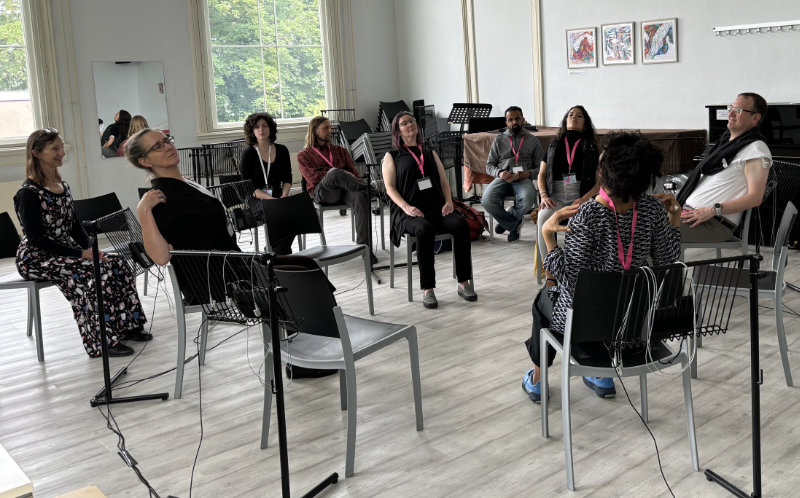
The workshop explores how interactive technologies based on bio- physical sensing and analysis can help create deeper connections with the surrounding world and one another, by combining the lat- est affect-indicating biosensors with somatic practices and creative expression. The workshop incorporates cutting edge biophysical sensing measurement technologies to explore new modes of artistic expression that directly gauge human affect as an integral compo- nent in the creation of an art work or performance. The goal is to explore how real-time tracking of a participant’s affective state can be used as an interactive modality in performance and computa- tional art. Human affect data is gathered from a custom biophysical sensing acquisition and analysis system called, THE SOURCE. Data is accessed in real-time using custom software tools built on popular platforms such as Arduino, Max/MSP, SuperCollider, Ableton Live, TouchDesigner, and Processing. Physiological measures, includ- ing Electrocardiography (ECG, heart rate), Electrodermal Activity (EDA), Electromyography (EMG, muscle), Electroencephalography (EEG, brain waves), Electrooculography (EOG, eye movement), and Respiratory effort (RSP, breathing) can be incorporated. During the workshop, we will explore the potential for creative uses, as well as more applied contexts to support physical therapy, group training and experiences.more…

Biophysical Expression, Affect & Movement (BEAM) at Aalborg University (Copenhagen campus) May 27-28-29, 2024
We are excited to offer a 3-day PhD course on Biophysical Expression, Affect & Movement (BEAM) at Aalborg University (Copenhagen campus) May 27-28-29 hosted by the Sound & Music Computing research group.
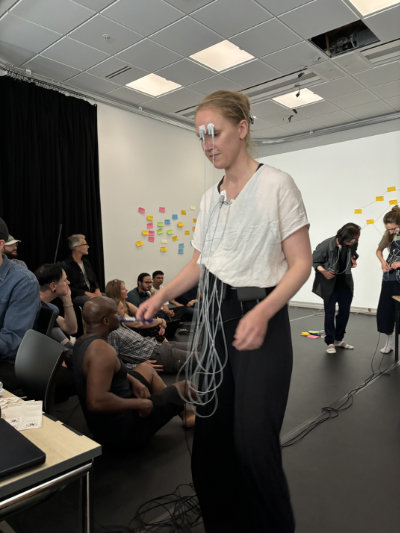
Lecturers: Mark-David Hosale (US/CA), Alan Macy (US),Grisha Coleman (US), Marco Donnarumma (DE/IT), Daniel Overholt (US/DK), Elizabeth Jochum (US/DK).
more…
ECTS: 3
Date/Time: 27, 28, 29 May 2024
**Registration Deadline: 06 May 2024
Course Description: Biophysical Expression, Affect & Movement (BEAM) introduces students to cutting edge research trends and technology platforms that monitor and augment human performance across both the creative industries and health sectors. The course offers hands-on workshop activities using advanced sensor technologies for physiological data, applied to real-time performance and augmented human capabilities with computation, including machine learning.
One platform to be explored is THE SOURCE by BioMECI. Design and integration with other platforms that integrate machine-learning approaches to multimodal human-computer interaction will also be explored. The course includes invited lectures & workshops with Grisha Coleman and Marco Donnarumma on critical computing, AI, and ethics as they relate to movement motion capture data, prosthetics, and research. The course will have a strong focus on somatic practices (f.ex. Feldenkreis), and practical work on embodied interaction. This course has cross-over appeal for creative computing applications (audiovisual interaction, sound and music computing) and health/rehabilitation applications (tele-health, digital health solutions/monitoring). Programming experience, Design of HCI systems, interest in affective computing and real-time systems exploring the arts, such as music / dance & movement / visual forms of expression and/or interest in working with medical devices/sensing/health monitoring devices for training and rehabilitation.
Prerequisites: Programming experience, Design of HCI systems, Interest in affective computing and real-time systems exploring the arts, such as music / dance & movement / visual forms of expression and/or interest in working with medical devices/sensing/health monitoring devices for training and rehabilitation.The course is open to international students outside of DK.
Important information concerning PhD courses:TheDoctoral School has decided to introduce a no-show fee of DKK 3.000 for each course where the student does not show up. Cancellations are accepted no later than 2 weeks before start of the course.
**Please note: the course is limited to 20 students.
REGISTRATION:To register,please write toMaria Bredvigmab@adm.aau.dk
About the Instructors
Alan Macy (alanmacy.com) is the founder of the Santa Barbara Center of Art, Science and Technology (sbcast.org) and R&D Director, and cofounder of Biopac Systems (biopac.com). His recent research explores ideas of sensory extension and autonomic regulation. As an applied science artist, he specializes in the creation of cybernated art, interactive sculpture and environments.
Mark-David Hosale is a computational artist and composer. He is an Associate Professor and Chair ofComputational Artsinthe School of the Arts, Media, Performance, and Design, at York University, Toronto, Ontario, Canada. He has given lectures and taught internationally at institutions in Denmark, The Netherlands, Norway, Canada, and the United States. His work explores the boundaries between the virtual and the physical world. His practice is varied, spanning from performance (music and theatre) to public and gallery-based art. His interdisciplinary practice is often built on collaborations with architects, scientists, and other artists.
Grisha Coleman is a time-based artist working in areas of choreography and performance, experiential technology, and sound composition. Her practice and research explore relationships across physiological, technological, and ecological systems; human movement, our machines, and the places we inhabit. Her echo::system project is a springboard for re-imagining the environment and environmental justice through participatory installation, chorography and composition in live performance, media and computation. Her current project, The Movement Undercommons: Technology as Resistance | Future Archives, creates a repository of vernacular movement data, imagining a lexicon centered around identity and embodied cultural narrative. Her work has been generously supported through a Radcliffe Fellowship(21/22), The National Endowment for the Arts in Media grants, the Rockefeller Multi-Arts Project [MAP] Fund, Creative Capital, the Jerome Foundation, the Surdna Foundation Thriving Cultures Grant, the MacDowell Arts Colony, the New York Foundation for the Arts, Carnegie Mellon University’s STUDIO for Creative Inquiry, Pioneer Works, the Rockefeller Foundation Bellagio Center, and Stanford University’s Mohr Visiting Artist Fellowship.She holds the position of Professor of Movement, Computation, and Digital Media in the in the College of Arts, Media, and Design at Northeastern University, and an affiliation with the School of Arts, Media, and Engineering, the School for the Future of Innovation in Society, and the Center for Race and Democracy at Arizona State University. Ms. Coleman is a New York City native.
Marco Donnarumma (DE) is an artist, performer, stage director and theorist weaving together contemporary performance, new media art and interactive computer music since the early 2000s. He manipulates bodies, creates choreographies, engineers machines and composes sounds, thus combining disciplines, media and technology into an oneiric, sensual, uncompromising aesthetics. He is internationally acknowledged for solo performances, stage productions and installations that defy genres, and where the body becomes a morphing language to speak critically of ritual, power and technology. The7 Configurationscycle, his latest project, includes dancetheater productions, performances and robotic installations. By experimenting with the corporeal and psychological relationships of four human performers and six AI prostheses, the pieces attempt to dissect the conflicts between AI and body politics. In 2019, he co-founded the performance groupFronte Vacuowith Margherita Pevere and Andrea Familari. Their ongoing saga,Humane Methods, consists of hybrid live art events as social experiments, where human performers and audiences, non-human organisms and AI-driven machines expose the violence of today’s algorithmic societies. During the seasons 2022-24, they are artists in residence at Volkstheater Wien.
Dan Overholt is an Associate Professor at Aalborg University Copenhagen. His research interests include advanced technologies for interactive interfaces and novel audio signal processing algorithms, with a focus on new techniques for creating music and interactive sound. He is involved in the development of tangible interfaces and control strategies for processing human gestural inputs that allow interaction with a variety of audiovisual systems. Dan is also a composer, improviser, inventor and instrument builder who performs internationally with his new musical instruments and custom sound synthesis and processing algorithms. Dr. Overholt received a PhD in Media Arts and Technology from the University of California, Santa Barbara, and a M.S. in Media Arts and Sciences from the Massachusetts Institute of Technology. He has about 90+ peer reviewed publications and two patents (one provisional).
Elizabeth Jochum is an associate professor at the RELATE Research Laboratory for Art and Technology at Aalborg University. Her research uses the visual and performing arts as catalysts for re-thinking how we design and implement robots and other assistive technologies. From industrial robots to exoskeletons, Dr. Jochum’s work involves transdisciplinary collaboration in human-robot interaction, health, and engineering to develop creative, value-sensitive, and human-centered approaches to ensure the technologies we build address the real needs of people. She coordinated the European ABRA project on Artificial Biology, Robotics and Art, and the ImprovAIze project on machine learning, dance improvisation, and wearables for artistic practice and rehabilitation. She served on the steering committing of Aalborg University Robotics, the Arts, Health, and Humanities center at AAU. She was named one of the top 50 Women in Robotics by Robohub in 2021.

ISEA 2022 Workshop /
Performance and Art as Cyber-Interoceptive Interfaces
with Mark-David Hosale and Alan J. Macy
June 10th and 11th, 2022 from 10h – 18h
at the Centre Cívic Convent de Sant Agustí, Comerç, 36, Barcelona
As part of the International Symposium on Electronic Art (ISEA) 2022
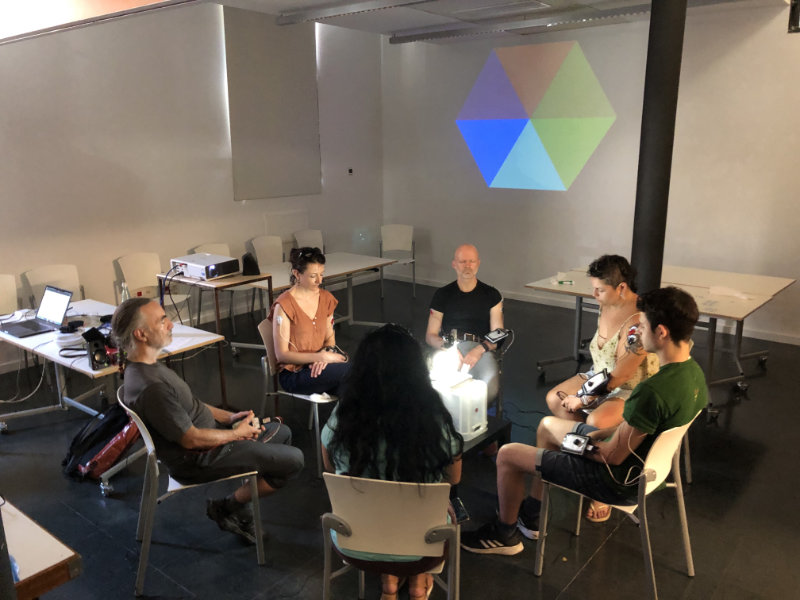
Abstract: This workshop incorporates bioinformatic measurement technology to explore new modes of artistic expression that directly incorporate the senses as part of the medium of the work. The focus of this endeavour involves the tracking of a participant’s emotive inclination for use as an interactive modality in performance and computational art.
more…
Emotional state data is gathered from a biosensing acquisition system and analyzed using custom software and hardware tools built on poplar platforms such as, Arduino, Max/MSP, SuperCollider, Ableton Live, TouchDesigner, and Processing. Physiological measures, such as Electrocardiography (ECG, heart rate), Electrodermal Activity (EDA), Electromyography (EMG, muscle), Electroencephalography (EEG, brain waves), Electrooculography (EOG, eye movement), and Respiratory effort (RSP, breathing) can be read. The tools explored provide the ability to control the presentation of audio-visual and haptic stimuli and monitor the physical reaction as nuanced by emotional state, blurring the line between auditory and visual virtual content and physical experience.
The workshop provides participants with a hands-on experience with our tools and methodologies that allow participants to explore several layers of activity within this work including:
1)The connection between the individual and physiological data, to see if it is possible to discover awareness with the systems of the body that are normally consciously ignored.
2)The connection made between two people, to see if there is a way that one can influence the embodiment of the other, and if the experience of embodiment can be shared.
3)The psychosocial potential of the combining of embodiment and physiological data by looking at how this technology could be used to explore group experiences, and the ability of a performer to affect the audience.
4)The role of affect and the environment, and how the participant or performer can have a biofeedback relationship with the audience and environment of an installation or performance.
Biographies:
Mark-David Hosale (www.ndstudiolab.com) is a computational artist and composer. He is an Associate Professor in Computational Arts at York University in Toronto. Mark-David’s work explores the boundaries between the virtual and the physical world. His practice is varied, spanning from performance (music and theatre) to public and gallery-based art. His interdisciplinary practice is often built on collaborations with architects, scientists, and other artists. Prominent ongoing art-science collaborations exist with the IceCube South Pole Neutrino Observatory; and in Performance, Art and Cyber-Interoceptive Systems (PACIS).
Alan Macy (https://sbcast.org/) is currently the R&D Director and a cofounder of Biopac Systems, a biomedical company. Macy is also the founder of the Santa Barbara Center of Art, Science and Technology (www.sbcast.org), a live/work residency and arts laboratory. Macy designs data collection and analysis systems, used by life science researchers, that help identify the meaning of signals produced by life processes. He has 35+ years of product development experience in human physiological monitoring. His recent research efforts explore ideas of human nervous system extension and the associated influences upon perception. As an applied science artist, he specializes in the creation of cybernated art, interactive sculpture and environments.
More information: https://ndstudiolab.com/pacis, https://isea2022.isea-international.org/event/workshop-performance-and-art-as-cyber-interoceptive-interfaces/
NeuroTechX Showcase Podcast
Applications (hardware and software) featuring Dr. Mark-David Hosale
Hosted by NeuroTechTO Leads Dr. Cris Micheli and Dr. John Griffiths. October 20th, 2021
Also on YouTube and CrowdCast.
Movement and Emotion as Computational Interfaces
workshop :: speaker series :: June 6th – June 12th, 2016
York University • School of the Arts, Media, Performance, and Design • Toronto, Canada
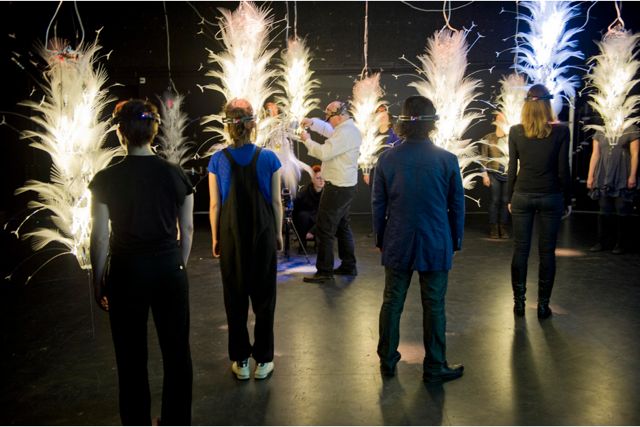
Photo credit: Evening of.. Philip Beesley/ PROTOCELL FIELD
Philip Beesley with Mark-David Hosale and Alan Macy
May 18th, 2012, 21:00 to 23:00 • Gouvernestraat 133, Rotterdam DEAF2012 Exhibition, May 17-June 3.
A quasi-metabolic ‘happening’ that uses collective neurosignaling to grow next-generation Hylozoic Series protocell formations.
Lead by an interdisciplinary team that have backgrounds in performance, computational media art, and bioengineering, the workshop will be a point of convergence for fields that are working in the larger domain of emotive research both internationally and within Canada. This includes consciousness hackers who explore how technology can positively change the way we think, feel, and live; performers and others who use somatic awareness as a tool for the recreation of authentic emotion; and computational media artists, who use technology to explore questions of human and machine through artworks that critique our techno-scientific world. The workshop is targeted for a diverse audience including students, emerging scholars and other highly qualified personnel from both the academic and private sectors. Participants are welcome from a variety of fields such as performance, somatic movement and awareness, computational media arts, entertainment, gaming, computer science, architecture, and other art/science collaborations. Recent research in bioinformatics suggests that it is possible to generate reasonably solid, actionable vectors to indicate the real-time emotional state of an individual using a layering of complex data sets sourced from physiological variables that contribute to an individual’s emotional valence (range of pleasantness to unpleasantness) and arousal (range of activation and deactivation). Arousal and valence data of a performer could hypothetically be used to develop co-collaborative applications that would be able help us increase our somatic awareness, make mediated emotive and somatic connections with each other, mediate the bi-directional emotive connection of a performer with an audience, and help mediate the affect of an individual within an environment. The potential for this research is the development of new modalities for human-computer interaction that hold the promise for the seamless integration of emotive and rational control over complex computing systems. This workshop will explore how technology can help us create deeper connections with the world around us, each other, and ourselves by combining the latest advances in bioinformatic sensing technology with modes of physiological awareness found in somatic performance practice. Primary outputs of this workshop will result in first principles in the creation of new and novel interfaces that integrate complex physiological data in performance and computational art contexts.more…